
EMS Foot Massagers: Do They Really Work?

Foot discomfort has quietly become one of the most common everyday health complaints in the United States. People who stand for long hours — nurses, warehouse workers, retail employees, teachers, and even athletes — frequently experience aching arches, heel pain, swelling, or numbness by the end of the day. Even office workers are not immune; prolonged sitting can reduce circulation in the legs and create the same tired, heavy feeling in the feet.
Because of this, interest in home recovery devices has surged, and one product in particular has become extremely popular: the EMS foot massager.
You have probably seen it advertised as a mat where you simply place your feet and let electrical stimulation massage your muscles. The claims sound impressive — improved circulation, pain relief, relaxation, and even support for neuropathy.
But the real question most people have is simple:
Does an EMS foot massager genuinely work, or is it just another wellness gadget?
This guide explains the technology, the benefits, the risks, and what you should realistically expect.
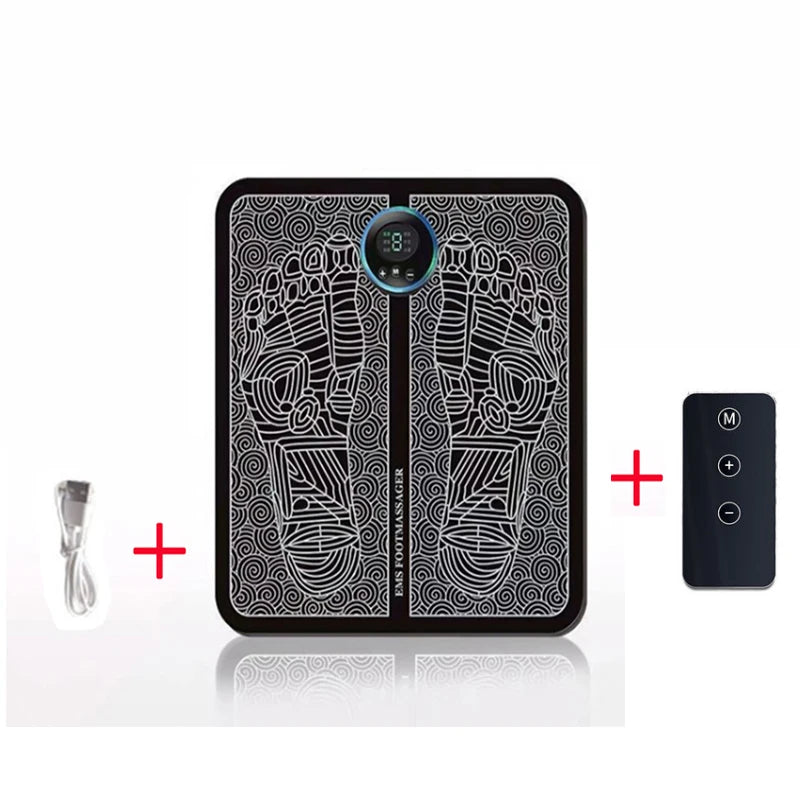
What Is an EMS Foot Massager?
An EMS foot massager is a portable therapy device that uses Electrical Muscle Stimulation (EMS) to activate muscles in your feet and lower legs. Instead of physically kneading your feet like a traditional massager, the device sends mild electrical impulses through electrode pads built into the mat.
When you place your bare feet on the pad, those impulses travel into the muscles and nerves beneath the skin. The stimulation causes small contractions — similar to what happens when your brain signals your muscles to move.
In simple terms, the device tricks your muscles into thinking they are exercising, even though you are sitting still.
This is not new technology. Physical therapists and rehabilitation clinics have used EMS machines for decades to help patients recover from injury, rebuild muscle strength, and improve circulation. The modern EMS foot massager is essentially a simplified home version of that clinical therapy.
How EMS Technology Works
Your body naturally controls movement through electrical signals. The brain sends impulses through nerves, telling muscles when to contract and relax. EMS devices replicate this process externally.
The foot pad contains conductive electrodes. When activated, the unit delivers low-frequency electrical pulses into targeted areas of the feet. These pulses stimulate both muscle fibers and nerve endings. As the muscles repeatedly contract and release, circulation increases and tension decreases.
Many users describe the sensation as a light pulsing, tapping, or tingling feeling. It should never be painful. Instead, it resembles a gentle vibrating massage that travels from the soles of the feet toward the calves.
Because the muscles are actually being activated, the body responds similarly to mild physical activity — blood flow improves and natural pain-relieving chemicals called endorphins are released.
Benefits of Using an EMS Foot Massager
The primary reason people try EMS therapy is relief from persistent foot fatigue. After long hours of standing or walking, muscles in the feet become tight and circulation slows. When circulation decreases, tissues receive less oxygen, which leads to soreness and swelling.
By repeatedly contracting the muscles, the device helps push blood back toward the heart. This pumping action improves oxygen delivery and reduces fluid buildup in the lower extremities. Many users notice their feet feel warmer and lighter after a session, which is a direct sign of improved circulation.
Pain relief is another major benefit. Electrical stimulation can interrupt pain signals traveling through nerves, meaning the brain receives fewer discomfort messages. This is why EMS therapy is often used in rehabilitation medicine. For individuals dealing with daily foot pain, the relief can be noticeable within days of regular use.
People with plantar fasciitis often find the device especially helpful. The condition occurs when the thick ligament along the bottom of the foot becomes inflamed. EMS does not replace stretching or proper footwear, but by relaxing surrounding muscles and increasing blood flow, it supports healing and reduces morning heel pain.
The stimulation also travels upward into the calves, which helps reduce leg fatigue. Travelers after long flights, seniors with circulation issues, and workers who remain on their feet all day frequently benefit from this effect.
Some users with mild neuropathy symptoms also report reduced tingling and improved sensation over time because the nerves are being repeatedly stimulated.
Who Benefits the Most?
Although almost anyone can use an EMS foot massager, certain groups typically experience greater improvement.
People who spend many hours standing often develop chronic muscle tension in the arches and heels. Athletes use it for recovery after training sessions. Older adults benefit from the circulation support, especially when mobility is limited. Office workers, surprisingly, also gain relief because prolonged sitting slows blood flow in the legs.
In short, the device is most helpful for individuals dealing with daily fatigue rather than occasional soreness.
Important Features to Look For
Not all devices provide the same experience. The effectiveness depends heavily on build quality and adjustability.
Intensity control is essential. Beginners should start at a gentle level and gradually increase as they adapt to the sensation. A device with only one or two settings rarely works well for long-term use because sensitivity varies between individuals.
Massage modes also matter. Different pulse patterns target muscles in slightly different ways, preventing the body from adapting to a single repetitive signal. A good unit allows you to switch between rhythmic pulses, tapping sensations, and deeper stimulation patterns.
Convenience features are surprisingly important too. A remote control allows adjustments without bending down, which keeps the session relaxing. Rechargeable batteries are preferable because disposable batteries weaken performance as they drain.
Finally, the pad itself should be large and conductive enough to distribute stimulation evenly. Poor electrode design often causes discomfort and is one of the main reasons some people think EMS devices do not work.

EMS Foot Massagers vs Traditional Foot Massagers
Traditional foot massagers rely on rollers or rotating nodes that press against the skin. They can feel pleasant, but they primarily affect surface tissues.
EMS devices work differently. Instead of pressing from the outside, they activate muscles internally. Because of this, they are silent, portable, and more effective for circulation improvement.
A mechanical massager may relax the skin and fascia, while EMS stimulates deeper muscle activity. Many users actually combine both for the best results.
How to Use It Correctly
Using the device properly significantly affects results. You should sit comfortably, place bare feet directly on the pad, and start at the lowest setting. Gradually increase the intensity until you feel a strong but comfortable pulsing sensation.
Sessions typically last between 15 and 25 minutes. Consistency matters more than power. Daily use produces far better results than occasional high-intensity sessions.
Slightly moist feet improve conductivity because electricity travels more evenly across the skin.
Are There Any Side Effects?
When used correctly, EMS foot massagers are generally safe. However, misuse can cause mild irritation or temporary soreness. Overly long sessions or very high intensity settings may fatigue muscles instead of relaxing them.
You should avoid using an EMS foot massager if you have:
- a pacemaker or implanted electronic device
- epilepsy
- blood clot disorders
- severe heart conditions
- pregnancy (unless approved by a physician)
People with medical conditions should always consult a healthcare professional before starting electrical stimulation therapy.
How Long Before You Notice Results?
Most users feel relaxation immediately after the first session. Within several days, foot fatigue often decreases. After two to three weeks of consistent use, many report noticeable reduction in chronic pain and improved comfort while standing or walking.
It is important to understand that EMS is not an instant cure. It works more like exercise — gradual improvement through repeated stimulation.
Common Mistakes That Reduce Effectiveness
Many first-time users misunderstand how the device works. Wearing socks blocks the electrical signal, and starting at the highest intensity can feel uncomfortable. Some people also try it once or twice and expect permanent relief.
Electrical stimulation therapy depends on routine use. The benefits accumulate over time.
Are EMS Foot Massagers Worth It?
For individuals with recurring foot fatigue, the devices can be extremely helpful. They will not replace medical treatment, physical therapy, or proper footwear, but they provide a convenient at-home method to support recovery and circulation.
The biggest advantage is consistency. Visiting a therapist regularly is expensive and time-consuming. A home device allows daily therapy in a matter of minutes.
Frequently Asked Questions
Q1: How often should I use it?
Once or twice daily for about 20 minutes works best.
Q2: Can it cure plantar fasciitis?
No single device cures it, but it can significantly reduce pain and speed recovery when combined with stretching.
Q3: Is it safe for seniors?
Yes, and older adults often benefit the most due to circulation improvement.
Q4: Does it help swollen feet?
Improved blood flow can reduce fluid buildup and heaviness.
Q5: Can I use it every day?
Daily use is actually recommended for consistent results.
Final Thoughts
EMS foot massagers are not a miracle device, but they are also far from a gimmick. The technology is based on legitimate electrical stimulation therapy used in rehabilitation medicine for decades.
When used regularly and correctly, the device can help relax muscles, improve circulation, and reduce chronic foot discomfort. For people who deal with tired feet every day, it offers a practical, low-effort way to support recovery at home.
If your feet regularly ache at the end of the day, an EMS foot massager is not just a comfort product — it is a recovery tool.


