

When a baby arrives, everything changes — including your cleaning routine. Conventional household cleaners that seemed perfectly fine before are suddenly a real concern. Babies explore the world through touch and taste. They put their hands in their mouths moments after touching a highchair tray, a freshly wiped countertop, or the inside of a just-cleaned bottle. That's why choosing the best baby safe cleaning products isn't just a preference — it's a genuine health priority.
This guide walks you through everything you need to know: which ingredients to watch out for, which products are truly worth your money, and how to build a baby-safe cleaning routine without turning your home into a chemistry project. We've also included specific product recommendations — including a game-changing tool that will make cleaning baby bottles faster, easier, and more hygienic than you ever thought possible.
Why Standard Cleaning Products Aren't Safe for Babies
Most mainstream cleaning products are formulated for adult environments. They work on the assumption that surfaces will be rinsed, dried, or kept out of contact with skin for extended periods. But babies operate on a completely different timeline. A baby can touch a surface within seconds of it being "cleaned" and have their fingers in their mouth moments later.
The immature immune systems and developing organ systems of newborns and infants make them especially sensitive to chemical exposure. Their skin is thinner, absorbs substances more readily, and is less effective as a barrier. Their livers and kidneys — responsible for processing and eliminating toxins — are still maturing. And because babies breathe faster than adults, airborne residues from cleaning sprays pose a proportionally greater inhalation risk.
"Babies are not just small adults. Their bodies process and respond to chemical exposures very differently — and the stakes of getting it wrong are much higher during critical developmental windows."
Studies have repeatedly shown that infants living in homes with frequent use of conventional chemical cleaners show higher rates of respiratory issues, skin sensitivities, and certain allergic responses. This doesn't mean your home needs to be sterile or cleaning-product-free — it simply means being intentional about what you use and where.
Ingredients to Avoid in Baby Safe Cleaning Products
When scanning labels for baby safe cleaning products, knowing what to avoid is just as important as knowing what to look for. The following ingredients are commonly found in household cleaners but are considered inappropriate for environments where infants and young children spend time.
🚫 Ingredients to Avoid Around Babies
- Parabens (preservatives)
- Phthalates
- Sulfates (SLS / SLES)
- Phosphates
- Synthetic fragrances
- Chlorine bleach
- Formaldehyde
- Triclosan (antibacterial agent)
- Methylisothiazolinone
- Artificial dyes
- Ammonia
- DEA / MEA / TEA
The most critical rule of thumb: if a product's ingredient list reads like an advanced chemistry exam, it's probably not your best choice for a baby's environment. True baby safe cleaning products use plant-derived surfactants, simple preservatives with strong safety profiles, and either no fragrance at all or only certified natural essential oils. They also tend to be transparent about their full ingredient lists — a good sign in itself.
What to Look for in a Baby Safe Cleaner
Shopping for baby safe cleaning products becomes much easier once you know what a good label actually looks like. Here's what genuine safety-focused products have in common:
Plant-Based Surfactants: Surfactants are the cleaning workhorses in any soap or detergent. Baby-safe versions derive them from coconut, corn, or sugar — things like alkyl polyglucosides and lauryl glucoside. These clean effectively without leaving harsh chemical residues.
Fragrance-Free or Naturally Scented: "Fragrance" as an ingredient can be a catch-all term that hides hundreds of undisclosed chemicals. Truly baby safe products are either entirely fragrance-free or use only certified natural botanical extracts. Note that "unscented" and "fragrance-free" aren't always the same thing — an "unscented" product may still contain masking fragrances.
Third-Party Certifications: Look for products certified by organizations like the Environmental Working Group (EWG), the Clean Label Project, or those that are dermatologist-tested. These certifications aren't foolproof, but they provide an additional layer of accountability.
No Synthetic Dyes: Dyes serve no functional purpose in a cleaning product. They're purely cosmetic — and they're unnecessary chemicals with no benefit to you or your baby.
Rinse-Clean Formula: For anything that comes into contact with items your baby puts in their mouth — bottles, sippy cups, pacifiers — you want a formula that rinses away completely without leaving any residue behind.
Best Baby Safe Cleaning Products for Bottles and Feeding Equipment
Baby bottles, nipples, sippy cups, pacifiers, and breast pump parts need to be cleaned after every single use. That means your dish soap choice matters enormously — you'll use it multiple times a day, every day, for months or even years. Here are two of the most trusted options on the market right now.
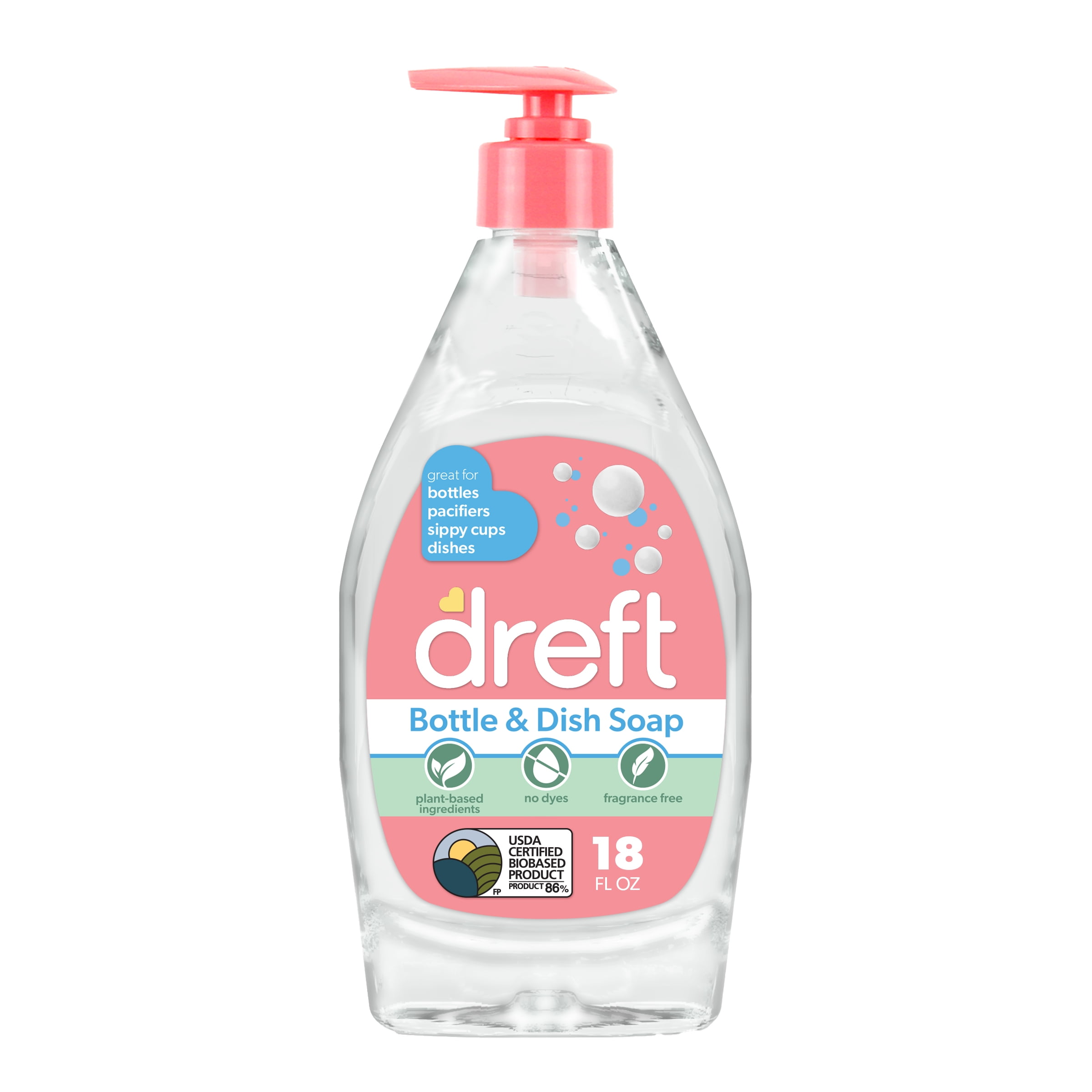
Dreft Plant-Based Liquid Dish Soap — Fragrance Free Baby Bottle Cleaner
Dreft has been trusted by families since 1933, and their bottle and dish soap lives up to that legacy. From the pediatrician-recommended Dreft brand, this soap joins their broader family of gentle, effective baby products including laundry detergent and stain remover. The formula uses aloe vera leaf juice and glycerin for gentleness, with a simple, short ingredient list you can actually understand. For parents who want a name they recognize and a formula they can trust, this is a go-to choice among the best baby safe cleaning products available today.

Dapple Baby Bottle & Dish Soap — Fragrance-Free, Plant-Powered
What sets Dapple apart is the specificity of its formulation. While many baby dish soaps simply remove harsh ingredients and call it a day, Dapple actually engineered their formula around the specific challenge of cleaning baby feeding equipment — milk residue, biofilm, and odor-causing bacteria that accumulate in the narrow curves of bottle nipples and sippy cup valves. The result is a soap that isn't just "safe" — it's actually better at cleaning baby items than most alternatives. Backed by over 2,000 positive reviews and rated 4.7 out of 5 stars, it's a clear favorite among parents looking for the best baby safe cleaning products for feeding equipment.
The Problem No Dish Soap Can Fully Solve
Here's something most baby cleaning guides won't tell you: even the best baby safe dish soap in the world is only as effective as the tool you use to apply it. Standard bottle brushes have a fundamental design problem. Their bristles — however good they look — struggle to reach the interior curves, crevices, and tight angles of modern bottle shapes. Milk residue hides in those spots. Biofilm builds there. And no amount of vigorous scrubbing with a manual brush can guarantee you're reaching every surface thoroughly, every single time.
This is why an electric baby bottle cleaner is one of the most genuinely useful investments you can make for your baby's health and your own daily sanity.
Electric Baby Bottle Cleaner Brush Set
A 1200mAh electric bottle brush designed specifically for baby bottles, nipples, and sippy cups. BPA-free, portable, and rechargeable — it spins to clean every interior surface your manual brush can't reach, pairing perfectly with your baby safe dish soap for a truly thorough clean every time.
Shop Now — Free Shipping + 50% Off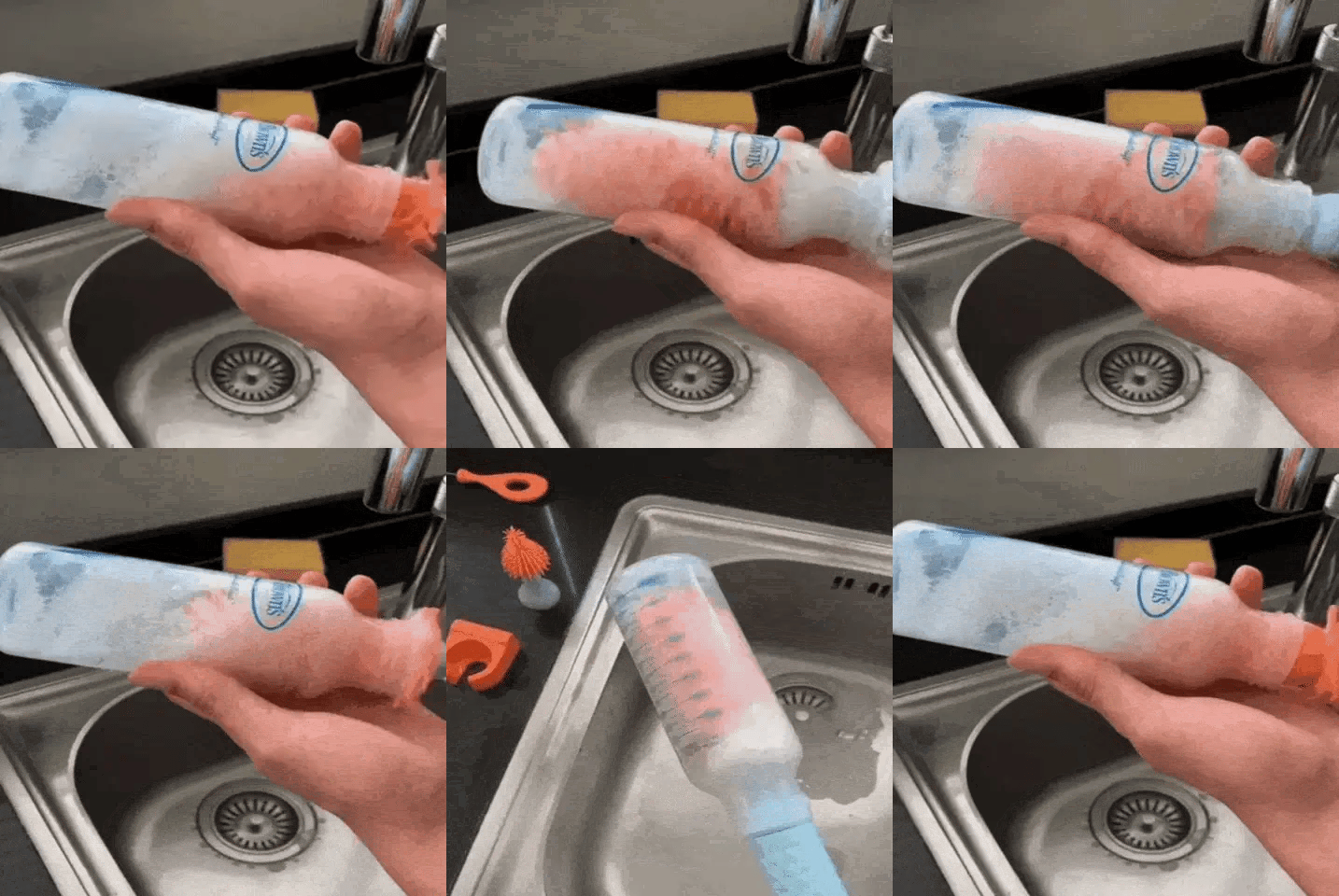
The Stellar Nook Electric Baby Bottle Cleaner Brush is the missing piece in most parents' baby safe cleaning routines. It works by rotating at high speed, creating consistent scrubbing contact with the full interior of a bottle — the base, the sides, and the shoulder — without the patchy, tired-arm cleaning you get from a manual brush. Because it's BPA-free and designed for direct contact with baby feeding items, you can use it confidently with any of the fragrance-free, plant-based dish soaps listed above. The 1200mAh rechargeable battery means you're not fumbling with replacements, and the compact design makes it portable enough for travel or a diaper bag.
Think of it this way: a great baby safe dish soap breaks down the milk residue and bacteria. The Stellar Nook electric brush ensures that every drop of that soap-powered cleaning action reaches every part of the bottle. Together, they're genuinely more effective than either alone.
Beyond Bottles: Baby Safe Cleaning Products for Every Area of Your Home
Bottle cleaning is just the beginning. As your baby grows, their world expands — and so does your cleaning responsibility. Here's how to approach each area of your home with baby safety in mind.
Nursery and Hard Surfaces
For wiping down cribs, changing tables, countertops, and hard floors in the nursery, look for plant-derived multi-surface sprays that are certified non-toxic and specifically labeled as baby safe. The key requirements: no synthetic fragrances, no ammonia, no bleach, and full transparency about ingredients. Spray, wipe, and ideally allow the surface to air dry before your baby comes into contact with it. Better yet, wipe down with clean water afterward for an extra layer of caution on any surface your baby will directly contact.
Laundry
Baby skin is significantly more sensitive than adult skin, and clothing sits against it all day. The best baby safe cleaning products for laundry are fragrance-free, dye-free detergents formulated for sensitive skin. The Dreft brand — the same trusted name behind the bottle soap above — also makes a pediatrician-recommended laundry detergent specifically for baby clothes. Avoid fabric softeners, which often contain synthetic fragrances and coating agents that can irritate baby skin. A clean rinse cycle is usually sufficient for softening without additives.
High Chairs and Feeding Surfaces
High chair trays, booster seats, and bibs need to be wiped down after every meal. Use the same plant-based dish soap you use for bottles — it's perfectly suited for food-contact surfaces. For deeper cleans, a mild white vinegar solution (diluted 1:1 with water) is a genuinely effective and completely safe option for removing stuck-on residue from high chair trays. Allow surfaces to dry fully before the next use.
Toys and Play Items
Soft toys should be washed in your gentle, fragrance-free laundry detergent according to care instructions. For hard plastic or rubber toys — especially teething toys — a soak in warm water with a small amount of baby-safe dish soap, followed by a thorough rinse, is the most reliable approach. Avoid dishwasher cycles for any toy not specifically labeled dishwasher-safe, as heat can degrade materials and release chemicals from certain plastics.
Building Your Baby-Safe Cleaning Routine
A good routine turns these individual choices into a sustainable system. Here's a practical framework that integrates the best baby safe cleaning products into your daily life without adding stress.
Clean Bottles After Every Use
Never let milk or formula sit in a bottle. Bacteria multiply rapidly in warm, protein-rich residues. Rinse immediately and wash fully with baby-safe dish soap and your electric bottle brush within a few hours.
Separate Baby Laundry
For the first several months, wash baby clothes, burp cloths, and bedding separately from the family's laundry using a fragrance-free, baby-specific detergent. This avoids cross-contamination with harsher detergents.
Ventilate When Cleaning
Even with baby safe cleaning products, open windows when cleaning the nursery or kitchen. Fresh air dilutes any airborne particulates and ensures your baby breathes clean air, not even mild cleaning product residues.
Store Products Safely
Keep all cleaning products — even baby-safe ones — out of reach and in a locked cabinet. As babies become mobile, curious hands explore everywhere. No product is safe enough to leave accessible to a crawling or toddling child.
Rinse Feeding Items Thoroughly
Even with the safest dish soap, rinse bottles and nipples under running water for at least 30 seconds after washing. The goal is zero soap residue — which is why pairing your soap with an electric bottle brush makes such a difference.
Sterilize Weekly
Beyond daily cleaning, sterilize bottles, nipples, and pacifiers at least once a week — especially for newborns. Steam sterilizers, boiling water, or dishwasher sterilizing cycles are all effective when used with bottles rated for them.
Are Natural or Homemade Baby Cleaning Products Better?
This is one of the most common questions parents ask, and the answer is nuanced. Some DIY solutions — like diluted white vinegar or baking soda paste — are genuinely effective and perfectly safe for certain surfaces. White vinegar is an excellent natural disinfectant for hard, non-porous surfaces like high chair trays. Baking soda works well as a mild abrasive for scrubbing stubborn residue.
However, homemade solutions have real limitations. They're not formulated for consistent performance, they don't have the shelf stability of properly preserved commercial products, and they haven't been tested for safety across the range of materials they might contact. A diluted vinegar spray is a great occasional tool, but it's not a complete replacement for a well-formulated, tested baby safe dish soap for daily bottle cleaning.
The sweet spot for most parents is a combination approach: use certified, plant-based commercial products for the daily heavy lifting — especially anything touching feeding equipment — and supplement with simple natural solutions where appropriate. You get the reliability and consistent safety of tested formulas plus the simplicity of whole-ingredient solutions where they genuinely work.
Frequently Asked Questions About Baby Safe Cleaning Products
Can I use regular dish soap to clean baby bottles?
Technically, yes — but it's not recommended. Regular dish soaps often contain synthetic fragrances, dyes, sulfates, and other ingredients that can leave residues on feeding items and irritate babies' developing systems. Baby-specific dish soaps like Dreft and Dapple are formulated to clean just as effectively while being completely free of these problematic ingredients.
How often should I sterilize vs. just wash baby bottles?
For newborns and young infants (under 3 months, premature, or immunocompromised), sterilize after every use. For healthy babies over 3 months, thorough washing with baby safe dish soap after every use is sufficient for daily cleaning, with sterilization once a week or whenever a bottle has been unused for a day or more.
Is an electric baby bottle cleaner brush actually necessary?
It's not strictly necessary, but it makes a significant real-world difference. Electric bottle brushes like the Stellar Nook model reach curved interior surfaces that manual brushes miss, ensuring your baby-safe soap actually contacts — and cleans — every part of the bottle. The result is a more hygienic clean, consistently, with much less effort.
Are fragrance-free products the same as unscented?
No — and the distinction matters. "Fragrance-free" means the product contains no fragrance ingredients at all. "Unscented" may mean that masking fragrances have been added to neutralize natural smells, meaning the product still contains fragrance compounds. For baby safe cleaning products, always look for "fragrance-free," not just "unscented."
When can I start using regular cleaning products again?
Many pediatricians and child health experts recommend maintaining baby-safe cleaning practices for at least the first two years of life, as immune and organ systems are still developing. Even after that window, many parents find they simply prefer the cleaner, gentler formulas — both for their children and for their own health.
The Bottom Line on Baby Safe Cleaning Products
Keeping your baby's environment clean doesn't require a complete overhaul of your home or a complicated system of a dozen different products. It requires being intentional about a handful of products your baby will actually come into contact with — and choosing those products based on transparent ingredients, genuine safety testing, and real-world effectiveness.
For bottle cleaning, Dreft Plant-Based Dish Soap and Dapple Baby Bottle Soap are two of the best baby safe cleaning products available — proven, trusted, and genuinely formulated for this purpose. For surface cleaning and laundry, the same principles apply: fragrance-free, plant-derived, and fully transparent about ingredients.
And for the cleaning tool itself? Pair any of these excellent baby safe soaps with the Stellar Nook Electric Baby Bottle Cleaner Brush to ensure that every drop of soap-powered cleaning action reaches every surface it needs to. That combination — the right soap, the right tool — is the most reliable, practical path to genuinely clean, safe feeding equipment for your baby, every single day.
Make Bottle Cleaning Effortless & Truly Safe
The Stellar Nook Electric Baby Bottle Cleaner Brush pairs perfectly with any baby safe dish soap. BPA-free, rechargeable, and designed to reach every surface. Free shipping + 50% off today.
Shop the Electric Bottle Brush →
