
How Big Is a Water Bottle? Sizes, Dimensions and How to Choose the Right One

Quick Answer
Water bottles come in a wide range of sizes. Common capacities include 8 oz (about 4–5 inches tall), 16.9 oz (the standard single-serve plastic bottle, roughly 8 inches tall), 20 oz, 24 oz, 32 oz, and 40 oz. Reusable stainless steel bottles often stand between 7 and 11 inches tall with a diameter of 2.5 to 3.75 inches, depending on capacity.
Table of Contents
- Introduction: Why Water Bottle Size Actually Matters
- Common Water Bottle Sizes Explained
- Water Bottle Size Comparison Table
- Plastic vs. Stainless Steel Bottles: How Size and Feel Differ
- How to Choose the Right Water Bottle Size for Your Lifestyle
- Water Bottle Dimensions Around the World
- Featured Product: Hydrogen Water Bottle
- Expert Tips for Getting the Most Out of Your Bottle
- FAQs
Introduction: Why Water Bottle Size Actually Matters
Most people grab whatever water bottle is closest and never think twice about it — until it doesn't fit in their car cup holder, spills out of their backpack, or runs dry before their gym session is over. The physical size of a water bottle matters more than it might seem at first glance.
Choosing the right size is really about matching capacity and dimensions to your actual daily life. Someone who works at a desk all day and refills from an office water cooler has very different needs from a hiker who needs to carry enough water to last six hours on a trail. A parent packing a school lunch needs a bottle that fits a kid's backpack and their small hands, not a 40 oz behemoth designed for endurance athletes.
Beyond capacity, the physical dimensions — height and diameter — determine whether a bottle fits in a standard cup holder, slides into a side pocket on your backpack, or stands upright in your fridge. These are practical questions that don't get talked about enough, and they're exactly what this article is here to answer.
Common Water Bottle Sizes Explained
8 oz — The Mini
At just 4 to 5 inches tall and about 2 inches in diameter, an 8 oz bottle is the smallest you'll commonly find. It holds roughly 240 milliliters, which is barely a cup of water. These are popular for kids' lunch boxes, airplane carry-ons, or short outings where you just need a small sip on the go. As a standalone hydration source, they're not enough for most adults — but they're adorably compact and useful as a supplement to a larger bottle.
12 oz — The Short-Commute Option
A 12 oz bottle typically stands about 6 to 7 inches tall with a diameter around 2.5 inches. That's roughly 355 milliliters. You'll find this size showing up in insulated cans and smaller tumbler-style bottles. It's enough for a short commute or a quick walk but will leave most people thirsty during a full workday or workout session.
16.9 oz — The Standard Single-Serve
This is the size most people picture when they think of a water bottle — specifically, the disposable plastic bottle sold at gas stations and grocery stores everywhere. At approximately 8 inches tall and 2.5 inches in diameter, it holds just under 500 milliliters (officially 500 ml in most markets, but labeled as 16.9 oz in the U.S.). It fits most car cup holders, backpack pockets, and gym bag slots. It's fine for casual daily use, though you'd need to refill or replace it several times to hit your recommended daily water intake.
20 oz — The Daily Carry Sweet Spot
The 20 oz bottle is where many people land for everyday use. These bottles typically measure 8 to 9 inches tall and 2.8 to 3 inches in diameter, holding about 591 milliliters. It's large enough to reduce how often you need to refill, while still fitting into most standard cup holders and side pockets. If you're someone who gets to a water source every few hours, a 20 oz bottle is usually plenty.
24 oz — The Office Companion
At around 9 to 10 inches tall and 3 inches in diameter, the 24 oz bottle holds roughly 710 milliliters. This is a popular choice for office workers who set the bottle on their desk and sip throughout the day. It's also a solid choice for yoga or light gym sessions. Worth checking the diameter before buying: at 3 inches wide, some 24 oz bottles are just a hair too big for narrow cup holders.
32 oz — The Serious Hydrator
A 32 oz bottle typically stands 10 to 11 inches tall with a diameter of 3.5 to 4 inches and holds about 946 milliliters — close to a full liter. This is a favorite among gym-goers, hikers, and anyone trying to hit a specific daily water intake without constant refilling. Two full fills of a 32 oz bottle gets you to the commonly recommended 64 oz per day. The trade-off is size and weight: a full 32 oz bottle of water weighs just over two pounds, and at nearly a foot tall, it won't slip into most car cup holders. If you're wondering how many mL are in a water bottle across different sizes, it's a useful reference when comparing U.S. and international sizing conventions.
40 oz — The Long-Haul Bottle
The 40 oz bottle has become culturally iconic in recent years, largely thanks to the rise of the Stanley Quencher and similar large-format insulated cups. These bottles hold about 1.18 liters and typically stand 11 to 12 inches tall with a wider base or handle. They're ideal for people who hate refilling, spend long stretches outdoors, or work in environments where access to water is limited. They're not cup-holder friendly in most cases, and they add noticeable weight to a bag. But for the right person, a 40 oz bottle means drinking enough water for half the day without even thinking about it.
64 oz — The Hydration Jug
A 64 oz bottle is more of a hydration jug than a standard bottle. At about 12 to 14 inches tall and up to 5 inches wide, these hold a full half-gallon of water and weigh over four pounds when full. They're popular with athletes, people doing heavy outdoor labor, and anyone who wants to fill up once in the morning and drink their entire daily water goal without touching a faucet again. Portability is limited — these are better suited to the gym floor, desk, or campsite than to being carried around a city.
Water Bottle Size Comparison Table
| Capacity | Height (approx.) | Diameter (approx.) | Weight Full | Best Use |
|---|---|---|---|---|
| 8 oz | 4–5 in | 2 in | 0.5 lb | Kids, short trips |
| 12 oz | 6–7 in | 2.5 in | 0.75 lb | Short commutes |
| 16.9 oz | 8 in | 2.5 in | 1.1 lb | Casual daily use |
| 20 oz | 8–9 in | 2.8–3 in | 1.25 lb | All-day carry |
| 24 oz | 9–10 in | 3 in | 1.5 lb | Office, light gym |
| 32 oz | 10–11 in | 3.5–4 in | 2 lb | Gym, hiking |
| 40 oz | 11–12 in | 3.5–4.5 in | 2.5 lb | Long days, outdoors |
| 64 oz | 12–14 in | 4.5–5 in | 4+ lb | Athletes, full-day hydration |
Note: Dimensions vary by manufacturer and design. Always check the product specs before purchasing if fit is critical.
Plastic vs. Stainless Steel Bottles: How Size and Feel Differ
The material of a bottle affects more than just how it looks — it changes the dimensions, weight, and how the bottle handles on a daily basis.
Plastic water bottles, especially single-use ones, tend to be lighter and slimmer. A 16.9 oz plastic bottle might weigh less than half an ounce empty, making it nearly weightless in a bag. The walls are thin, so the outer diameter closely matches the internal capacity. This is why plastic bottles are so universally compatible with cup holders and backpack pockets — they're designed to be slim and easy to carry.
Stainless steel bottles, particularly insulated double-wall varieties, have noticeably thicker walls. A 20 oz stainless steel bottle might have an outer diameter 10 to 15% wider than a plastic bottle of the same capacity, simply because the insulation layer takes up space. The trade-off is significant: a quality stainless steel bottle keeps your water cold for 12 to 24 hours and hot drinks warm for up to 12 hours. The weight is higher even when empty — an insulated stainless steel bottle might weigh 12 to 16 ounces before any water is added — but many people find this a worthwhile trade for temperature performance and durability.
For things like backpack side pockets and car cup holders, it's worth measuring the diameter of a stainless steel bottle before assuming it'll fit where you want it to go. A 32 oz stainless steel bottle with a 3.75-inch diameter won't fit the standard 3.35-inch cup holder in most vehicles.
How to Choose the Right Water Bottle Size for Your Lifestyle
The right bottle for you depends almost entirely on how you spend your day and how often you're near a water source.
For the gym, a 32 oz bottle is hard to beat. It carries enough water to last most people through a full workout without refilling, and most gyms have water fountains if you do need to top off. If you're doing intense training or long endurance sessions, a 40 oz bottle removes even that inconvenience.
For hiking, think about trail length and access to water. For trails under two hours with water sources along the way, a 24 or 32 oz bottle is usually sufficient. For full-day hikes or remote trails, 64 oz or a hydration pack is safer. Weight matters a lot here — water weighs about 2.2 pounds per liter, so carrying a full 64 oz adds over four pounds to your pack.
For the office, a 24 or 32 oz bottle on your desk is ideal. It's large enough that you can set a goal of finishing it twice during the workday, hitting your 64 oz daily target without thinking much about it.
For school, kids typically do well with 12 to 16 oz bottles that are lightweight, easy to open, and sized for small hands. A 16 oz bottle that fits in a lunch box sleeve and a backpack side pocket is the practical sweet spot.
For travel, size comes down to what you can carry through security. Reusable bottles must be emptied before airport security and refilled on the other side. A 20 to 24 oz bottle is a good travel companion — large enough to keep you hydrated on a flight but small enough to fit in an airplane seat pocket or under-seat bag.
For everyday hydration, most adults need somewhere between 64 and 100 oz of water per day depending on body weight, activity level, and climate. A 32 oz bottle that you refill twice, or a 40 oz bottle that you refill once and supplement with other beverages, are both practical ways to hit that target without obsessing over it.
Water Bottle Dimensions Around the World
Water bottle sizing is surprisingly non-standard globally, and it creates real confusion for travelers and international shoppers.
In the United States, bottle capacity is typically expressed in fluid ounces (fl oz). In Europe, Australia, Canada, and most of the rest of the world, milliliters (ml) and liters (L) are the standard. A 16.9 oz bottle in the U.S. is the same as a 500 ml bottle sold everywhere else — the liquid quantity is identical, but the labeling is completely different.
The 500 ml single-serve bottle has become something of an international standard for disposable plastic water bottles, showing up in nearly identical form across continents. But reusable bottle sizing is far less consistent. A "standard" water bottle in Europe might be 600 ml or 750 ml, while U.S. brands tend to cluster around 20 oz (591 ml) and 32 oz (946 ml).
Manufacturers also set their own sizing conventions, which means a 32 oz bottle from one brand might be 10.5 inches tall while another brand's 32 oz bottle sits at 11.2 inches. The capacity is the same; the dimensions are not. This is worth keeping in mind when buying accessories like bottle holders, sleeve cases, or cup holder adapters — always measure the actual bottle, not just its labeled size.
One of the more unusual questions that comes up around water bottles is can you put gas in a water bottle — which sounds strange but reflects real curiosity about what these containers can and can't safely hold beyond water.
Featured Product: Hydrogen Water Bottle
If you're looking for more than just a standard water bottle, a hydrogen water bottle can add extra convenience while supporting your daily hydration routine.
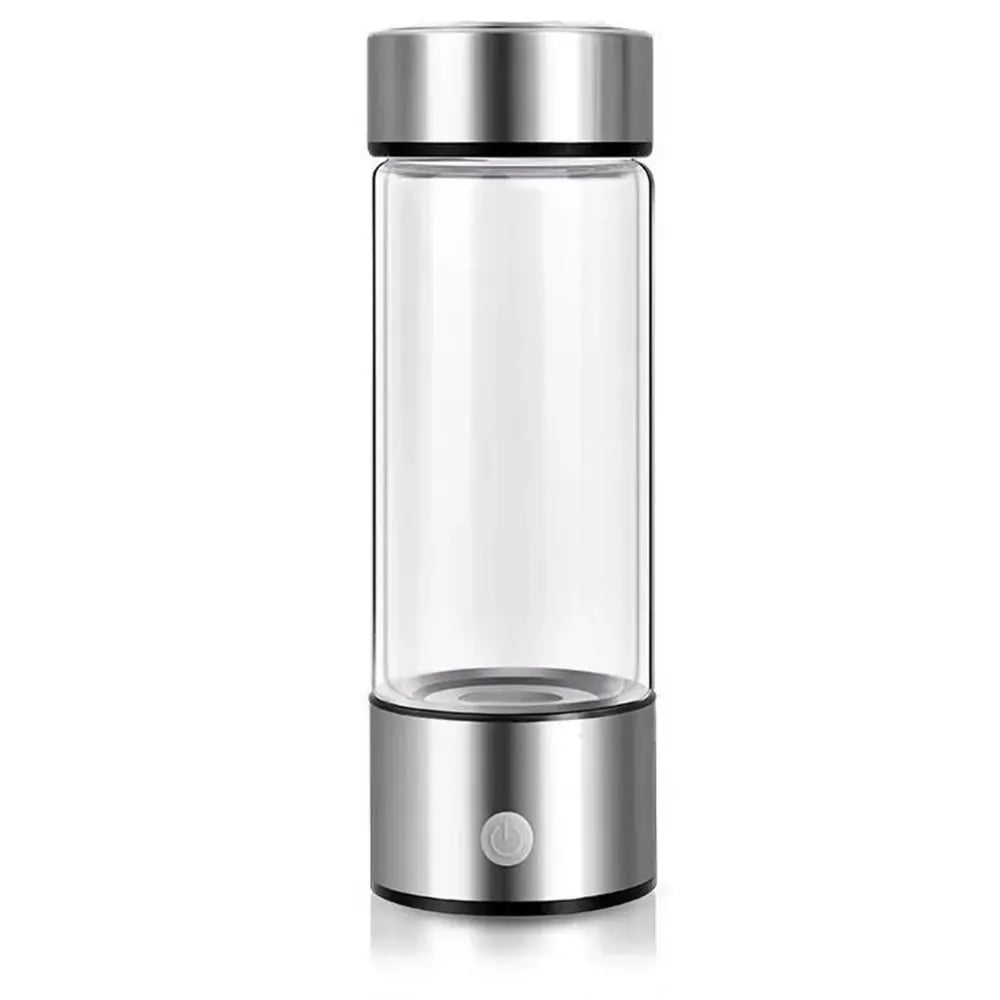
Hydrogen Water Bottle
Price: $56
👉 Shop the Hydrogen Water Bottle
The Hydrogen Water Bottle from Stellar Nook is a solid option if you're curious about hydrogen-infused water as part of your wellness routine. It produces hydrogen-rich water through electrolysis, requires no special setup beyond charging and filling, and is sized for everyday portability. The compact design makes it practical to use at the gym, at your desk, or while traveling — without taking up more space than a standard insulated bottle.
Expert Tips for Getting the Most Out of Your Bottle
Measure before you buy. If you're replacing a bottle for a specific purpose — fitting a particular cup holder, sliding into a backpack side pocket, or stacking in your fridge — measure the space first and compare it to the product specifications. The labeled capacity tells you nothing about the physical dimensions.
Know your cup holder. Most standard car cup holders accommodate bottles up to 3.35 inches in diameter. Wide-mouth 32 oz and larger stainless steel bottles often exceed this. If you rely on your cup holder, double-check the diameter listed in the product specs before purchasing.
Check backpack compatibility. Most standard backpack side pockets comfortably hold a bottle up to 3 inches in diameter and 10 to 11 inches tall. Taller, wider bottles may not fit or may cause the backpack to tip. Some hiking packs have stretch pockets that accommodate wider bottles, so check the pack's specifications if you're carrying a 32 oz or larger.
Cleaning larger bottles. Wide-mouth bottles (openings of 2 inches or more) are much easier to clean thoroughly than narrow-mouth designs. For a 32 oz or 64 oz bottle, a long-handled bottle brush is essential — particularly for getting to the bottom. Stainless steel bottles should never go in the dishwasher if the manufacturer doesn't explicitly say so, as high heat can damage the vacuum seal.
Storage tips. For multiple bottles, store them uncapped and upright to allow airflow and prevent odor buildup. Lidded storage racks designed for water bottles keep them organized in a cabinet without taking over the shelf. If you're refrigerating a metal bottle, note that most stainless steel bottles are too tall for standard fridge shelves when standing upright — laying them on their side works fine as long as the lid is sealed.
Don't overlook the fun side of bottle customization. If you've ever wondered how to make an edible water bottle, it's a genuinely creative project — and one that gives you a completely new perspective on what "water bottle" can mean beyond the standard store-bought options.
Frequently Asked Questions:
How tall is a standard water bottle?
A standard single-serve plastic water bottle (16.9 oz / 500 ml) is approximately 8 inches tall. Reusable stainless steel bottles range from about 7 inches (for smaller 18 oz sizes) to 12 inches or more for 40 oz bottles. Height varies significantly by brand and design.
What is the most common water bottle size?
The 16.9 oz (500 ml) disposable plastic bottle is the most widely sold size globally. Among reusable bottles, 20 oz and 32 oz are the most popular capacities for everyday use.
How wide is a 16.9 oz water bottle?
A standard 16.9 oz plastic water bottle is approximately 2.5 inches in diameter at its widest point, making it compatible with nearly all car cup holders and backpack pockets.
How big is a 32 oz water bottle?
A 32 oz water bottle typically stands 10 to 11 inches tall and measures 3.5 to 4 inches in diameter, depending on the brand and whether it has a wide or narrow mouth. It holds approximately 946 ml of liquid.
Does bottle size affect hydration?
Indirectly, yes. People who carry larger bottles tend to drink more water throughout the day simply because they have it readily available. A visible, large water bottle acts as a passive reminder to drink, which research consistently shows improves daily hydration.
What size water bottle fits in a car cup holder?
Most standard car cup holders accommodate bottles up to 3.35 inches (about 85 mm) in diameter. This includes most 16.9 oz, 20 oz, and some 24 oz bottles. Wider-diameter 32 oz and 40 oz insulated bottles often don't fit without an adapter.
How many inches is a reusable water bottle?
Reusable water bottle heights range from about 7 inches (small 14–18 oz) to 12 or more inches (40 oz). Most common reusable bottles in the 20–24 oz range stand between 8.5 and 10 inches tall.
Which water bottle size is best for everyday use?
For most adults, a 24 oz or 32 oz bottle strikes the best balance between capacity and portability. It reduces how often you need to refill, fits most bags and pockets, and makes hitting daily hydration goals much more manageable.
How do manufacturers measure bottle size?
Water bottle capacity is measured in fluid volume — ounces (fl oz) in the U.S. or milliliters (ml) internationally. Physical dimensions (height and diameter) are measured at the bottle's tallest and widest points. However, these measurements aren't standardized across brands, so two bottles with identical capacities can have noticeably different external dimensions.
Is a bigger water bottle always better?
Not necessarily. A larger bottle means more water available but also more weight and bulk. The best size is the one you'll actually carry and drink from consistently — a 20 oz bottle you refill regularly is more useful than a 64 oz jug you leave in your car because it's too heavy to carry.

