
How Does a Keychain Charger Work? Everything You Need to Know in 2026

Introduction: Why Keychain Chargers Are Everywhere in 2026
Smartphones have become essential for communication, navigation, payments, and even work. But battery life still remains a daily struggle for many users. This is where the keychain charger has become one of the most practical innovations in portable charging.
A keychain phone charger is a compact, lightweight, and always-accessible charging device designed to attach to your keys, bag, or pocket. Unlike traditional power banks, it is built for convenience and emergency situations rather than full multi-day charging.
But the real question most users ask is:
How does a keychain charger work?
To understand that, we need to look at its internal structure, battery system, charging mechanism, and real-world usage.
What Is a Keychain Charger?
A portable keychain charger is a miniaturized power bank that integrates a rechargeable lithium battery, charging circuit, and a built-in connector such as USB-C, Lightning, or Micro-USB.
Its purpose is simple:
To provide emergency power on the go when your phone battery drops unexpectedly.
Unlike bulky portable charging devices, a battery keychain charger is designed for:
- Everyday carry (EDC)
- Emergency charging
- Travel convenience
- Lightweight backup power
It does not replace a full power bank but acts as a reliable backup solution when you need just enough battery to make calls, send messages, or access maps.
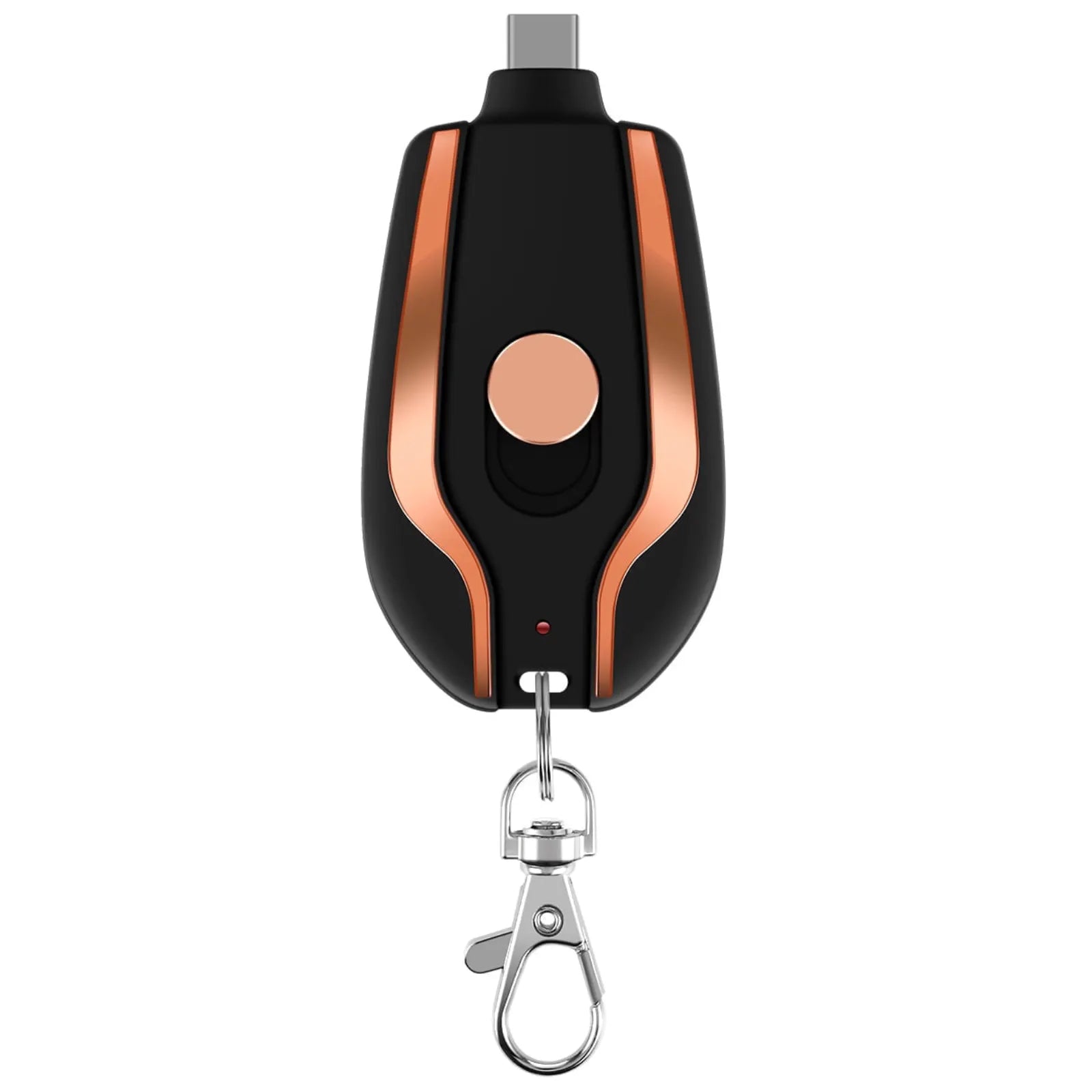
How Does a Keychain Charger Work?
To understand the functionality, let’s break it down into a simple technical flow:
A keychain charger works by storing electrical energy in a small lithium-ion or lithium-polymer battery. When connected to a smartphone, it transfers that stored energy through a controlled circuit that regulates voltage and current to match your device safely.
Step-by-Step Working Process
When you plug your phone into a mini phone charger, the following happens:
- The internal battery releases stored DC (direct current) power
- A voltage regulator adjusts the output (usually 5V standard USB output)
- The charging cable transfers energy to your phone
- Your phone’s internal charging system converts it safely into battery storage
This process is similar to a standard power bank but optimized in a much smaller form factor.
The key difference is capacity limitation, which is why a portable keychain charger is meant for emergency use rather than full charging cycles.
Internal Components of a Keychain Charger
A typical emergency phone charger includes several compact but essential components:
1. Lithium Battery Cell
Stores electrical energy. Most keychain chargers use 1500mAh–5000mAh capacity cells depending on size.
2. Power Management Circuit
Regulates voltage output to ensure safe charging without damaging your phone.
3. Built-in Connector
Modern models often include USB-C or Lightning heads to eliminate the need for extra cables.
4. LED Indicator System
Displays battery level and charging status.
5. Protective Shell
Usually made of ABS plastic or aluminum for durability while attached to a keychain.
Why Keychain Chargers Are So Popular in 2026
The rise of compact mobile lifestyles has made portability more important than ever.
A portable charging device like a keychain charger solves real problems:
- Phones draining during travel
- Unexpected battery emergencies
- Long commutes without power access
- Outdoor usage like hiking or delivery work
Unlike large power banks, users don’t need to carry extra bags or cables.
It becomes part of your everyday essentials.
How to Use a Keychain Charger Properly
Many users search for how to use a keychain charger, and the process is surprisingly simple.
First, ensure the charger is fully charged before leaving home. Most models recharge via USB in 1–2 hours.
Then:
- Unfold or detach the built-in connector
- Plug it into your phone’s charging port
- Press the power button (if required)
- Allow emergency charging to begin
Because it is designed for quick top-ups, it typically provides 20–60% battery depending on capacity and phone type.
This makes it perfect as an emergency phone charger rather than a full replacement for wall charging.
Keychain Charger vs Power Bank: What’s the Difference?
While both devices store energy, their purpose is different.
A power bank focuses on high capacity, while a keychain charger focuses on portability.
A keychain phone charger is:
- Smaller
- Lighter
- Always accessible
- Designed for short-term emergency use
A power bank is:
- Larger
- Higher capacity
- Better for travel or multi-device charging
Many users actually carry both for different situations.
Are Keychain Chargers Safe to Use?
Yes—if they are properly manufactured.
A high-quality battery keychain charger includes multiple safety protections:
- Overcharge protection
- Short circuit protection
- Temperature control
- Voltage regulation
However, low-quality products may lack proper circuitry, so choosing a trusted brand is important.
Do Keychain Chargers Work on All Phones?
Most modern portable keychain chargers support:
- iPhone (Lightning or USB-C models)
- Android devices (USB-C, Micro-USB in older models)
Compatibility depends on the connector type, not the charging method itself.
Real-Life Use Cases of Keychain Chargers
A keychain charger is not meant for full charging cycles—it is a situational tool.
Common scenarios include:
- Your phone dies during navigation
- You need to make an urgent call
- You are traveling and cannot access outlets
- Your battery drops during outdoor work
- Emergency communication situations
This makes it a true emergency phone charger for modern life.
Internal Knowledge & Related Reading
If you want to understand deeper usage scenarios and comparisons, these guides provide helpful context:
-
Travel safety and regulations
-
Best options available in 2026
-
How to choose the right model
-
Travel-friendly smart charging tools
- Everyday essential guide
- Buying guide for best selection
-
10 Best Keychain Phone Chargers
-
Expert picks and recommendations
-
Stylish tassel design guide
-
Air travel rules explained
- Understanding portable chargers
Advantages and Limitations of Keychain Chargers
A mini phone charger is extremely useful, but it is important to understand both strengths and limitations.
It excels in portability and convenience. However, it cannot fully replace high-capacity charging systems.
Its biggest advantage is accessibility—because it stays attached to your keys, you always have power available when needed.
Its limitation is battery size, which restricts full phone charging cycles.
Future of Keychain Chargers in 2026 and Beyond
With improvements in battery density and fast-charging technology, future portable charging devices are expected to become even smaller and more efficient.
We may see:
- Higher capacity in the same small size
- Wireless keychain charging
- Solar-assisted emergency charging
- AI-powered battery management
This evolution will make the keychain charger even more essential in daily life.
Conclusion
So, how does a keychain charger work?
It stores electrical energy in a compact lithium battery and delivers it safely to your phone through regulated voltage output. It is not designed for full charging cycles but for convenience, portability, and emergency situations.
As smartphones continue to dominate daily life, the keychain charger has become one of the most practical accessories in 2026.
If you need a lightweight, always-available backup solution, a portable keychain charger is one of the smartest tools you can carry.
Frequently Asked Questions (FAQs)
What is a keychain charger used for?
A keychain charger is used for emergency phone charging when your battery is low and you do not have access to a wall charger or power bank.
How long does a keychain charger last?
It typically lasts for 1–2 partial phone charges depending on battery capacity and phone model.
Can a keychain charger fully charge a phone?
Most models are not designed for full charging. They are meant for quick top-ups and emergency power.
How do you charge a keychain charger?
You charge it using a USB cable connected to a power source like a wall adapter or laptop.
Is a keychain charger safe for iPhones and Android phones?
Yes, as long as it has proper voltage regulation and safety certification.
How fast does a keychain charger work?
Charging speed varies but is generally slower than wall chargers due to compact battery size.
Is a keychain charger better than a power bank?
It depends on usage. A keychain charger is better for portability, while a power bank is better for full charging capacity.
Can I carry a keychain charger on a plane?
Yes, most airlines allow portable chargers in carry-on luggage, but regulations may vary by airline and country.

